
Community Cohesion and Unity Whilst in Diaspora
At the GAMSCA annual cultural festival gala dinner on the 18th July 2026, H.E. Dr. Fatou Bensouda, High Commissioner of the Republic of The Gambia to the UK, gave a speech about the importance of unity and community cohesion whilst in diaspora.
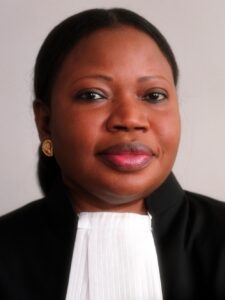
This speech excerpt was delivered by H.E. Dr. Fatou Bensouda at the Gambian and Friends in Scotland Community Association (GAMSCA) annual cultural festival gala dinner on the 18th July 2026, where YouthLink Scotland received an award in recognition of our support to GAMSCA. H.E. Dr. Fatou Bensouda is the High Commissioner of the Republic of The Gambia to the United Kingdom.
Wherever Gambians go, home travels with us. It travels in our names, in our greetings, in the food we prepare, in our music, in the respect we show our elders and in the hopes we carry for our children. These things remind us of who we are and where we come from. But shared memories alone do not make a strong community. A strong community is built when people look out for one another, when they disagree without hatred, and when everyone, young or old, feels that there is a place for them. This is why our theme tonight, community cohesion and unity whilst in diaspora, matters so deeply.
I thank Mr Lamin Sanneh, the Executive and members of the Gambians and Friends in Scotland Community Association for the warmth of your invitation and for the work that has brought us together for this Cultural Weekend. I also thank the wider Scottish community and all the friends of The Gambia who are here with us. Your presence reminds us that unity grows when people meet, listen to one another and celebrate what they share. My public service has taken me from Banjul to Kigali, Rwanda, to Arusha, Tanzania, from The Hague to London. In each place, I have learned that people do not remain united simply because they come from the same country. Unity is a choice. It is something we practise through respect, patience and care. It becomes visible in the way we treat people, especially those who may not be able to offer us anything in return. My years in the service of justice also taught me that laws and institutions matter greatly, but they cannot do everything. The law can protect rights, but it cannot visit a lonely person. A policy can support inclusion, but it cannot mentor a child. An embassy can represent a nation, but it cannot replace the kindness through which people recognise and support one another. Strong institutions are necessary, but strong human relationships are what make belonging real. Life in the diaspora brings many opportunities. Gambians have studied, built businesses, entered professions, supported relatives and contributed to the places in which they live. We should be proud of these achievements.
The diaspora continues to make an important contribution to families, communities and national development. But we must also recognise the quieter difficulties. A person may be doing well and still feel lonely. A new arrival may have courage and qualifications but may not know where to find help. An elderly person may feel forgotten. A family may be facing illness, bereavement or financial hardship without knowing whom to approach. Parents may worry that their children are losing touch with Gambian language and culture. Young people may feel caught between the country of their heritage and the country in which they are growing up. This is where community becomes important. Community means that no one should face every difficulty alone. It means noticing when someone has withdrawn. It means welcoming the newcomer, visiting the sick, comforting the bereaved, guiding the young and remembering the elderly. It means being present not only during celebrations, but also when life becomes difficult. The true measure of a community is not how impressive it appears at a gala dinner. It is how dependable it becomes in an hour of need. Does the newcomer find an open door? Does the bereaved family continue to receive support after the first days of sympathy have passed? Does a young person who has lost direction find guidance before judgement? Does the person without wealth, status or influential connections still feel that he or she belongs? There is a wisdom that every mother understands. A family is not strong because its members never disagree. It is strong because disagreement does not end the relationship. A mother corrects, but she does not stop caring. She sees the child who is quiet, the one who is struggling and the one who needs another chance. She knows that holding a family together requires both firmness and compassion. Our community needs that same spirit. We must be able to speak honestly without insulting one another. We must correct what is wrong without humiliating people. We must protect those who are vulnerable and leave room for people to learn, change and return. We should not turn temporary disagreements into permanent separation. This matters because disagreements can travel with us. Political differences from home can become arguments abroad. Regional, ethnic, religious and personal differences can separate people who should be supporting one another. We must never allow these differences to become walls around our community. Social media has also changed the way disagreements are handled. A small misunderstanding can quickly become a public dispute. Words are shared before the facts are known, and the harm may remain long after the message has been deleted. We must remember that speed is not truth, and public humiliation is not justice.
Unity does not mean silence when something is wrong. It does not mean protecting misconduct or avoiding difficult conversations. It means dealing with problems fairly. It means listening to all sides, establishing the truth and seeking a solution that protects dignity. A mature community can demand accountability without seeking revenge. Its strength is not shown by the absence of conflict, but by the fairness and wisdom with which conflict is resolved. We must pay particular attention to our young people. Many young Gambians in Scotland are growing up with more than one identity. They should not be made to feel that they must choose between being Gambian and being Scottish. They can value both. They can carry the strength of their Gambian heritage while taking their full place in Scottish society. We should teach them our history, languages, music and values. But we must also listen to them. They have questions, experiences and challenges that may be different from those of their parents. They need mentors, career guidance, opportunities to lead and safe spaces in which they can speak honestly about identity, discrimination, mental wellbeing and responsibility. Our young people are not visitors to our culture. They are the ones who will carry it forward. If we want them to remain close to the community, they must be invited to participate in shaping its future. We should give them roots, but we must also give them room to grow.
Culture is not only what we wear, eat or perform. Culture is also how we treat people. It is how we welcome a guest, how we speak to an elder, how we respond when a neighbour is in need and how we use whatever influence we may have. Our culture remains alive when its values can still guide us in our daily lives. This evening, the kora gives us a beautiful picture of unity. Its strings do not all produce the same note. Each has its own sound and its own place, but together they create music. In the same way, unity does not require us to become identical. It asks us to bring our different gifts, experiences and voices together for the good of the community. That shared purpose must include service. The contribution of the diaspora is not measured only by the money sent home, important though that support is. It is also measured by the knowledge we share, the young people we mentor, the businesses we help to build, the community projects we support and the opportunities we create for others. Our love for The Gambia should also make us good neighbours in Scotland. Respect for the law, participation in community life, friendship across cultures and service to others do not weaken our Gambian identity. They show the values of our country at their best. We honour The Gambia when our conduct earns trust and respect in the places where we live.
I also wish to recognise the quiet work upon which communities so often depend. It is found in the person who prepares food for a grieving household, accompanies someone to an appointment, translates a document, organises a youth activity, mediates a dispute or calls an elder who has not been seen for some time. Women have carried a great part of this social work across generations, frequently without title or recognition. Their contribution must be valued, shared and supported. A community cannot continue to depend upon invisible sacrifice while failing to recognise those who hold so much of its daily life together.
No association, embassy or institution can create unity on behalf of a people. Leaders can encourage it and programmes can support it, but unity is ultimately built through our daily conduct. It grows through simple choices that may never receive public recognition. It begins when we telephone someone who has been quiet for too long, welcome a newly arrived family, guide a young person, refuse to spread an unverified story, settle a disagreement fairly or give our time to a common cause. It grows when we choose patience over pride, truth over rumour and service over personal recognition.
When we leave Hampden Park tonight, let us carry more than photographs, awards and pleasant memories. Let us leave with a promise to care more, listen more and serve more. Let it be said of the Gambian community in Scotland that we kept our culture alive, made room for everyone and stood together when it mattered. Like the kora, may our different voices create one beautiful music. Different journeys, one community. Different generations, one responsibility. Different gifts, one shared purpose. May our unity be strong enough to face disagreement, generous enough to include everyone and active enough to improve the lives of others.
Image credit: Max Koot Studio, CC BY-SA 3.0 <https://creativecommons.org/licenses/by-sa/3.0>, via Wikimedia Commons